Ask any grower who has watched a freshly drilled paddock come up patchy and they’ll tell you the same thing: slugs never really go away. They’re in the paddock all year, quietly building numbers, and they do their worst damage right when a crop is at its most vulnerable. The better you understand how they live and feed, the easier it is to stay a step ahead of them with Ironmax Pro.
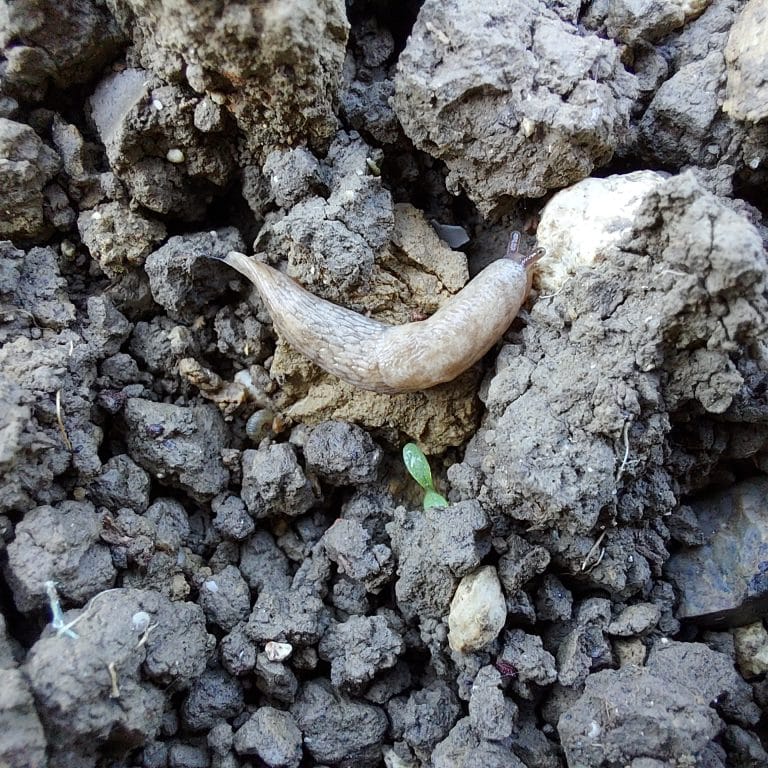
Two species do most of the damage in New Zealand cropping: the grey field slug and the brown field slug. Both are active twelve months of the year, but the real pressure comes in autumn and spring, when the soil is cool and damp and there’s tender seedling growth to feed on.
You’ll rarely catch them in the act. Slugs feed at night and tuck themselves under residue, clods and stones during the day, so the first sign of trouble is usually chewed leaves or missing plants rather than the slug itself. Don’t assume they’re confined to one corner of the paddock either. A slug can cover up to 13 metres in a single night.
They breed fast. An individual slug lives for around a year and can lay somewhere between 300 and 500 eggs in that time. Those eggs can hatch in as little as a fortnight, which means a population you thought you’d dealt with can bounce back before the crop is out of the danger zone.
Cultivation practice matters. Low and minimum tillage systems leave more residue on the surface, and that residue gives slugs shelter, moisture and a food supply. If you’re running no-till or min-till, expect higher slug pressure and plan for it.
And keep in mind that seedlings are the weak point. Damage that an established plant would shrug off can take out an emerging one completely.
Effective slug control comes down to planning and monitoring, not reacting once the crop is already thin. Here’s how we’d approach it.
Start with the paddock’s history. If it’s had slug problems before, it almost certainly will again. Build that into your plan from the outset.
Assess numbers before drilling and pre-bait if needed. Getting bait out ahead of the crop gives you a head start on the population that’s already there.
Bait before emergence, not after. The window between germination and establishment is when slugs do the most harm, so bait needs to be in place well before the crop comes through.
Treat baiting as non-negotiable under minimum tillage. The residue that makes min-till work for you also makes it work for slugs.
Monitor constantly. Slug mats or refuge traps are the simplest way to see where slugs are and how many you’re dealing with. Check them regularly rather than relying on a single count.
Put a number on the pressure. Use your trap counts to work out the level of slug activity in each paddock, then choose a bait rate that matches it. Low pressure and high pressure need different responses.
Judge success by the crop, not the slug count. After baiting with Ironmax Pro, look for feeding damage rather than dead slugs. A crop free of feeding damage is the result you’re after.
Keep watching for the next hatch. With eggs hatching in as little as two weeks, new juveniles can appear well after your first application.
Reapply if pressure holds. One application is not always enough.
Know your paddocks, know your slug pressure, and never underestimate what these slimy gluttons can do to a young crop.

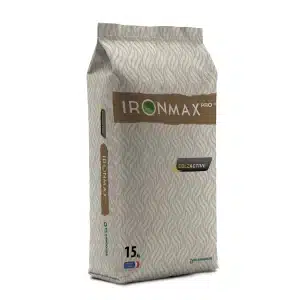
When it comes to getting bait out before slugs reach your seedlings, Ironmax Pro® is the next-generation slug and snail bait. It’s BioGro certified and the pellet density and shape deliver even spreading out to 24 metrs and unmatched rain fastness. It’s effective on slugs and snails while being gentle on the environment.
For more information, talk to your local De Sangosse Technical & Sales Manager or contact us below.
Technical & Sales Manager
Lower North Island/Tasman/Marlborough
Mobile: +64 (0) 27 336 0191
Commercial Nutrition Manager
Australia & New Zealand
Technical & Sales Manager
Lower South Island
Mobile: +64 (0) 21 473 458
Biologicals Development Lead
Technical & Sales Manager
Upper North Island
Mobile: +64 (0) 21 242 6217